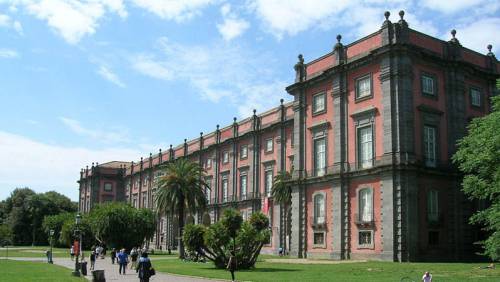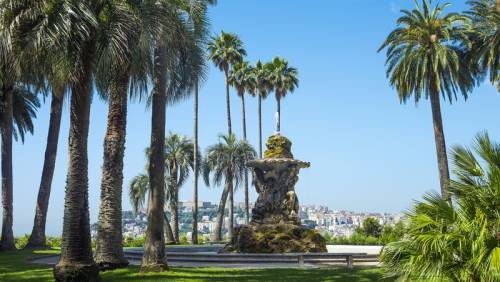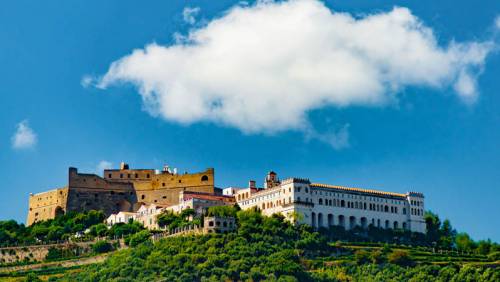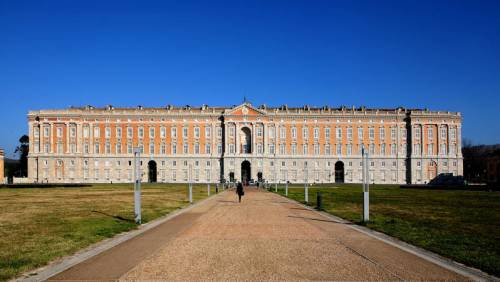
Within the Royal Park of Capodimonte, you’ll come across several buildings constructed between the 18th and 19th centuries to meet the specific needs of the Bourbon court. Some were designed for leisure and ceremonial life, others served religious or productive purposes, while a few supported the park’s agricultural management. Together, they form a diverse architectural ensemble that reveals how the park was conceived not merely as a place of recreation but as a fully self-sufficient and multifaceted environment.
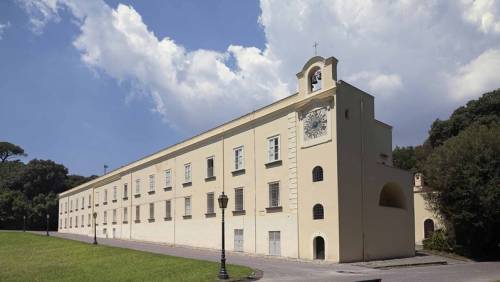
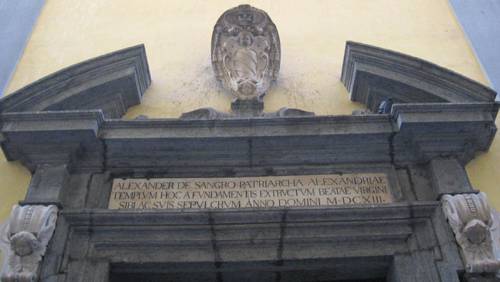
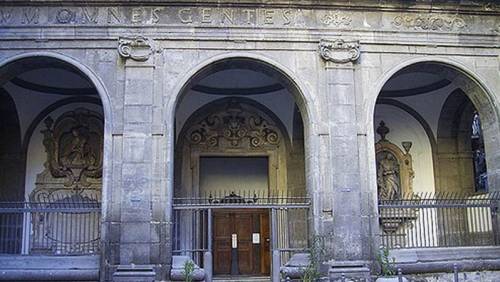
Among the most notable buildings is the Church of San Gennaro, designed in the 18th century by architect Ferdinando Sanfelice. Its presence within a royal park highlights the importance of spirituality even in a setting dedicated to entertainment and representation. Elegant and harmonious in design, the church was used for religious services for the benefit of the court and those who lived permanently at Capodimonte.
Another site of great interest is the Porcelain Factory, one of the Bourbons’ most prestigious initiatives to establish in Naples a luxury manufactory capable of rivaling those of the great European courts. The Capodimonte porcelains, renowned for their exceptional quality and refinement, became a symbol of prestige and are still considered one of the finest products of 18th-century Neapolitan craftsmanship.
Also worth noting is the Stufa dei Fiori, a heated greenhouse used for cultivating rare and exotic plants. At a time when botany was a central focus of scientific and cultural curiosity, the Stufa made it possible to preserve tropical and ornamental species that amazed visitors to the royal court. It was a tangible expression of modernity and of the Bourbons’ openness to European trends.
Alongside these main buildings stand others such as the Palazzina dei Principi, a small residence intended for more private leisure, and the Capraia, which recalls the park’s agricultural role with its functions related to breeding and production.
Together, these structures show that the Royal Park of Capodimonte was designed as a true microcosm—a place where nature, art, religion, and production coexisted within a single, harmonious space.
Here’s an interesting fact: In the 19th century, the Church of San Gennaro was deconsecrated for a time and converted into a storage facility, so much so that many Neapolitans no longer thought of it as a sacred place but referred to it simply as the “warehouse of the park.” Only through recent restorations has it regained its original function and splendor.
1 hour of use
Unlock Artificial Intelligence (AI) and enhance your experience
Do you want to explore even more or discover cities not yet covered by the app?
Activate our AI.
It will guide you with the same engaging tone, answering your curiosities in real-time.