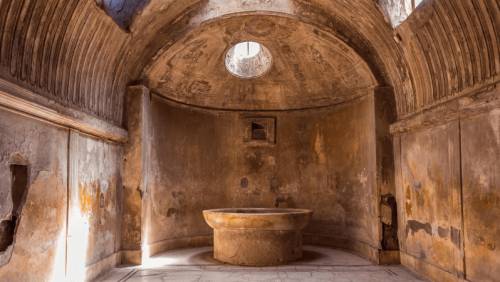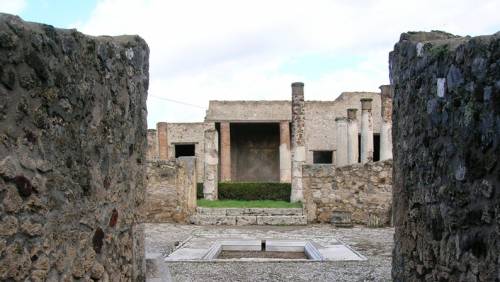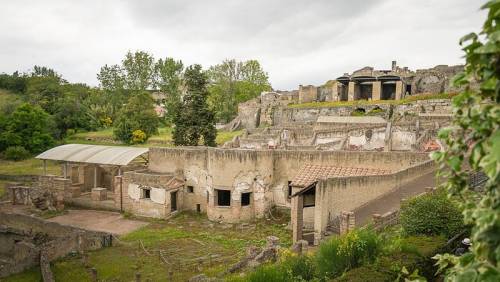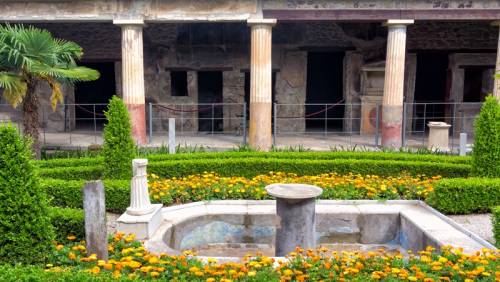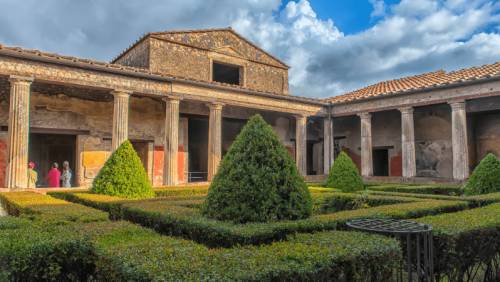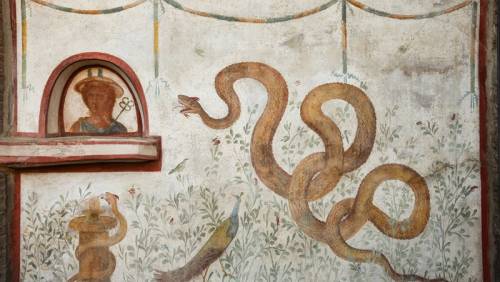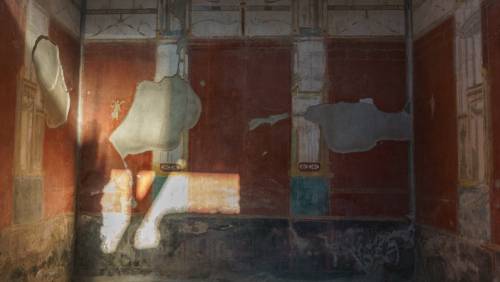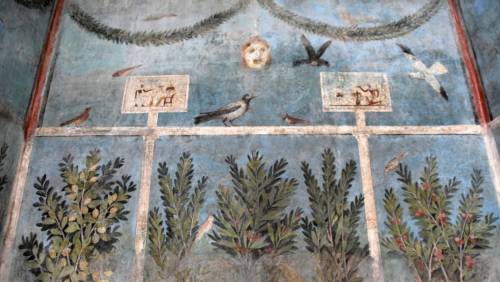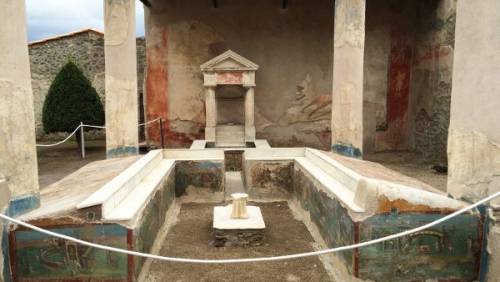
The House of the Cryptoporticus takes its name from its most distinctive feature — the cryptoporticus, a semi-subterranean colonnaded corridor that runs beneath the garden like an underground gallery. This covered passage served both a decorative and functional purpose, connecting the main reception rooms with a small private bath complex. It featured barrel vaults, openings to let in light, and a design that combined utility with elegance.
The domus was originally built as an independent residence between the late 2nd and 1st centuries B.C. Later, the garden level was raised, and the ground-floor porticoes were transformed into the cryptoporticus we see today. Following these renovations, the house was connected to the neighboring House of the Iliac Shrine, forming a single large and prestigious residence.
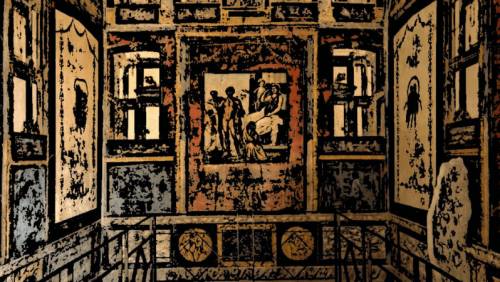
One of the main reasons this domus is so remarkable is its decorative program. The walls of the cryptoporticus are painted in the Second Style: a geometric frieze runs along the base, above which appear painted herms—small pilasters topped with busts—and, in the upper zone, a long frieze of miniature panels inspired by Homer’s Iliad, complete with Greek captions identifying heroes and gods.
Even the small rooms of the private baths were richly decorated. Their walls feature illusionistic paintings with false columns and architectural perspectives that give the impression of larger, open spaces. The stuccoed vaults add further elegance, with reliefs and subtle light effects enhancing the sense of depth and refinement.
Above the cryptoporticus lay the reception rooms, including the oecus—a grand hall for entertaining guests—decorated with mosaic floors and fine wall paintings. At the back of the garden stood the lararium, the household shrine dedicated to the family gods. From this area, two stairways connected the different levels: one ascending toward the triclinium and kitchen, and another descending to the cryptoporticus and private baths.
This house also tells deeply human stories. In the garden, archaeologists found several plaster casts of victims of the eruption, including a famous pair of individuals embracing—now identified through genetic studies as two unrelated men—and a young boy of about fifteen.
Let me leave you with an interesting fact: the epic frieze in the House of the Cryptoporticus is one of the very few known examples of a painted Roman wall cycle inspired by Homer’s Iliad. The homeowner likely intended it to display his cultural education and his connection to the heroic ideals of Greek tradition.
1 hour of use
Unlock Artificial Intelligence (AI) and enhance your experience
Do you want to explore even more or discover cities not yet covered by the app?
Activate our AI.
It will guide you with the same engaging tone, answering your curiosities in real-time.