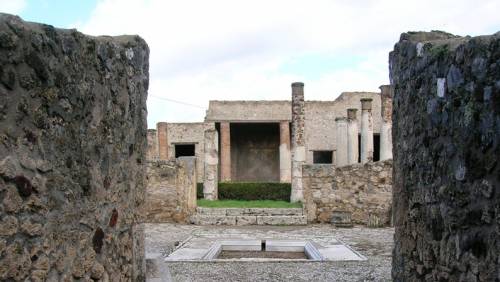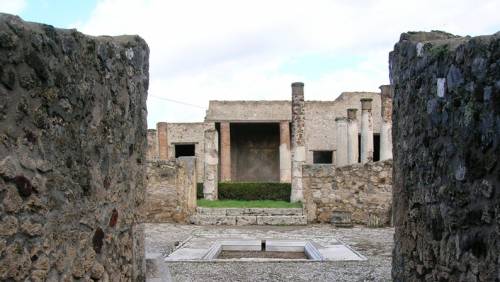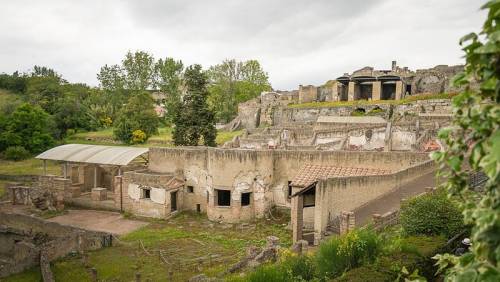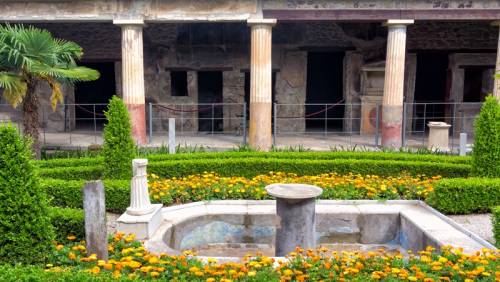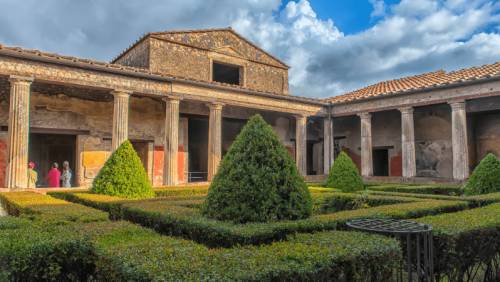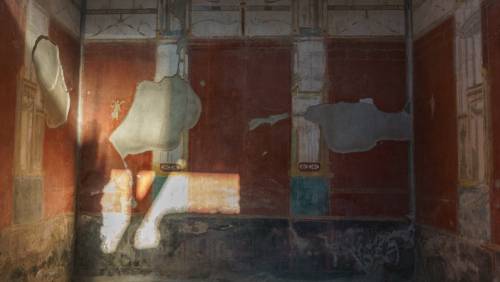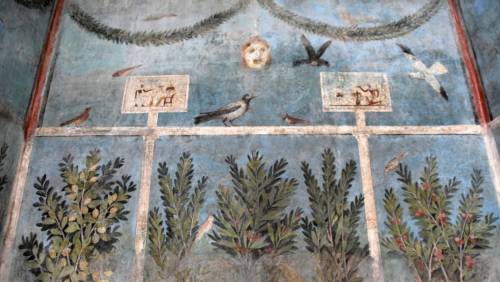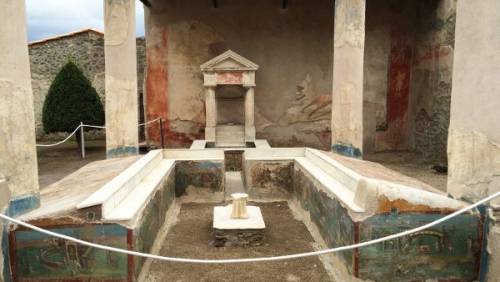
The House of Triptolemus is one of the most elegant residences of late Republican Pompeii. Built in the 2nd century B.C. and renovated around 80 B.C., after the city became a Roman colony, it occupied a prestigious location in one of the most desirable neighborhoods. The level of decoration and architectural design immediately reveals that its owners belonged to a cultured and affluent elite.
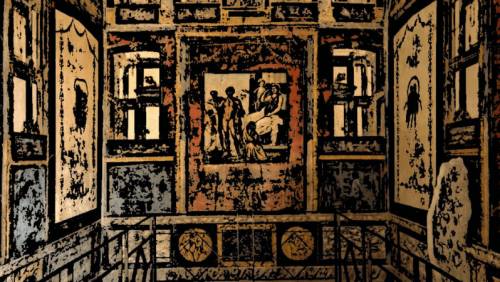
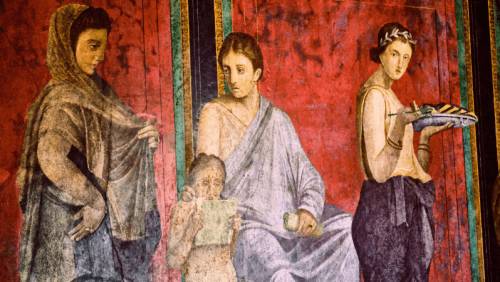
At the heart of the house was the triclinium, the dining room used for banquets, decorated with a truly remarkable fresco. It depicts Triptolemus, the young hero of Greek mythology, receiving from Persephone, daughter of Demeter and queen of the Underworld, a basket filled with ears of wheat—a powerful symbol of fertility. This is not a common theme in Pompeii: the scene recalls the Eleusinian Mysteries, secret religious rites celebrated in the Greek city of Eleusis, near Athens, dedicated to Demeter and Persephone. These cults, symbolizing the cycles of sowing and harvest, offered initiates the promise of rebirth after death, mirroring nature’s renewal each spring. This detail tells us much about the owners’ refined taste and intellectual interests — they wished to display not only their wealth but also their cultural sophistication.
Another striking feature is the mosaic floor in the room overlooking the inner courtyard. Its design features perspective cubes, a geometric pattern that creates a surprisingly modern three-dimensional effect. This motif was highly popular between the 2nd and 1st centuries B.C. and stands as a testament to the technical mastery of Pompeian artisans.
The house experienced a new revival thanks to an extensive restoration project completed in 2014, which brought back the brilliance of its mosaics and the vividness of its frescoes, allowing visitors once again to appreciate their original splendor.
Let me leave you with an interesting fact: Triptolemus is a figure from Greek mythology, renowned for his pivotal role in teaching humankind the art of agriculture. The son of Celeus, king of Eleusis, and Metanira, he received from Demeter and Persephone the sacred gift of wheat, becoming a timeless symbol of fertility and abundance.
1 hour of use
Unlock Artificial Intelligence (AI) and enhance your experience
Do you want to explore even more or discover cities not yet covered by the app?
Activate our AI.
It will guide you with the same engaging tone, answering your curiosities in real-time.