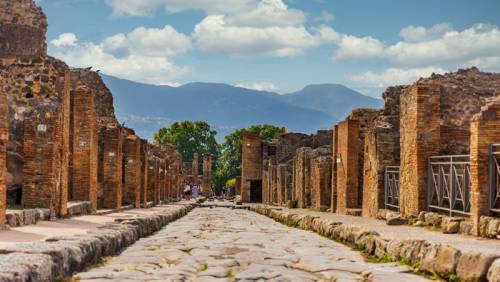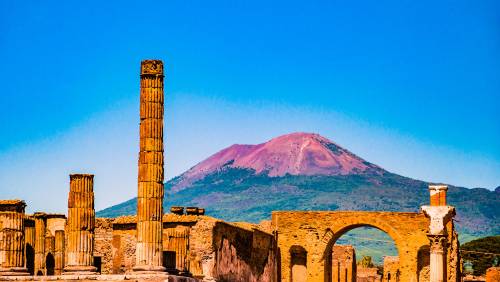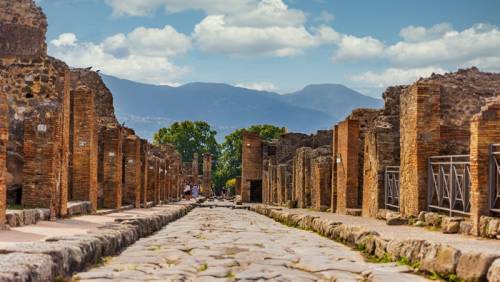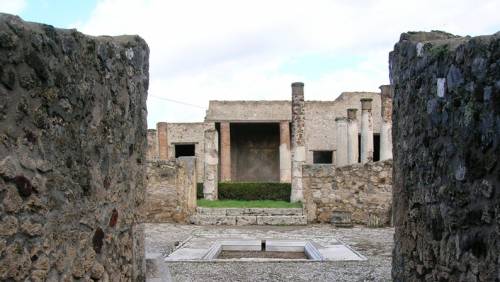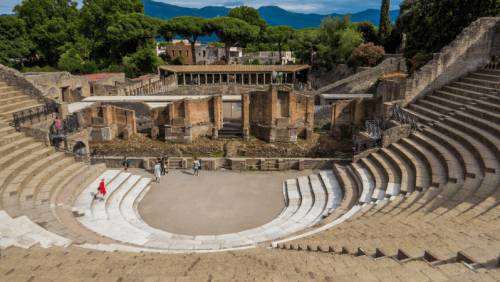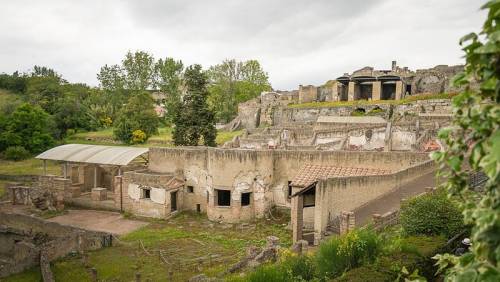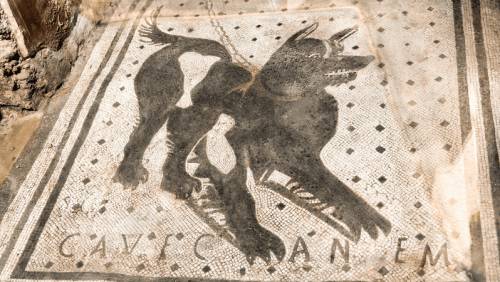
Via dell’Abbondanza is one of Pompeii’s main streets. Stretching for nearly a kilometer, it connects the Forum area to Porta di Sarno and intersects major crossroads such as Via Stabiana.
Its modern name comes from a relief showing the personification of Abundance, discovered on a fountain along the route. The street’s original ancient name, however, remains unknown.
Since Roman times, this thoroughfare has been a lively center of commerce, craftsmanship, and social life. Today, it offers scholars one of the best places to study the daily rhythms of the city buried by the eruption of A.D. 79.
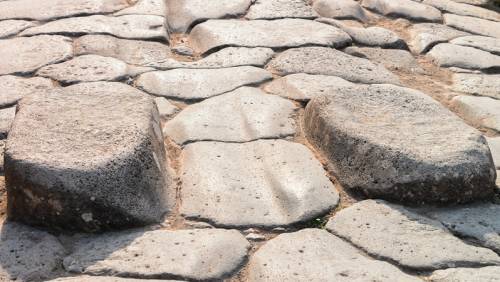
Walking along the stone pavement, you can still see the deep ruts left by carts and the raised stepping stones that allowed pedestrians to cross even when water flowed down the street. The slightly elevated sidewalks are lined with a dense succession of shops (tabernae), thermopolia — ancient bars or snack counters with large storage jars (dolia) for food and drinks — and bakeries equipped with stone mills. Public fountains at the intersections, supplied by the city aqueduct, provided water for residents and artisans.
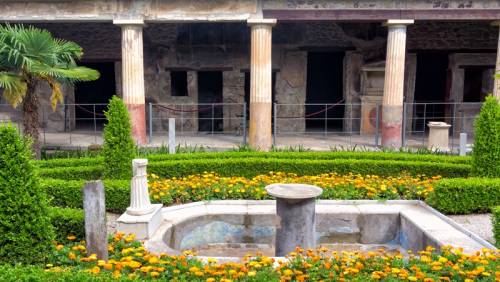
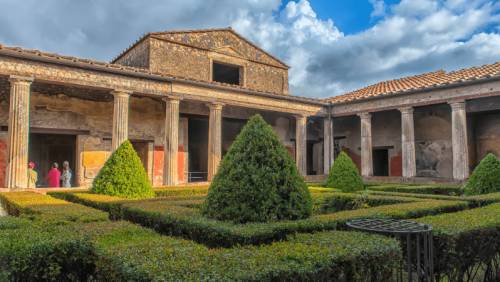
Several of Pompeii’s most iconic sites stand along or close to Via dell’Abbondanza: the Fullonica of Stephanus, a large laundry and dye works where fabrics were washed and bleached; the Thermopolium of Asellina, recognizable by its counter and electoral inscriptions; the House of Octavius Quartio, famous for its garden with canals and pergolas; and the Bakery of Modestus, which still preserves its ovens and work areas.
The walls lining the street also preserve graffiti and electoral slogans (programmata) — painted endorsements, campaign messages, and calls to vote. These inscriptions formed a kind of ancient public notice board, capturing voices, preferences, humor, and everyday concerns of Pompeian life.
Let me leave you with an interesting fact: recent studies of organic remains found in the sewers beneath Via dell’Abbondanza have revealed that the Pompeians enjoyed a surprisingly varied diet. Traces of fish, meat, and vegetables have been identified, showing that their cuisine was far more diverse and sophisticated than once believed.
1 hour of use
Unlock Artificial Intelligence (AI) and enhance your experience
Do you want to explore even more or discover cities not yet covered by the app?
Activate our AI.
It will guide you with the same engaging tone, answering your curiosities in real-time.