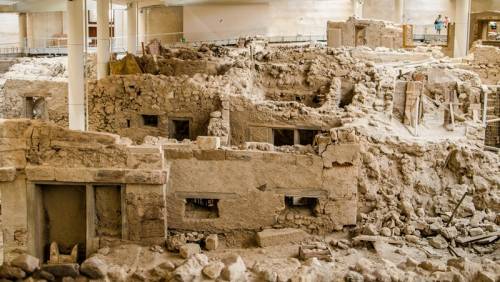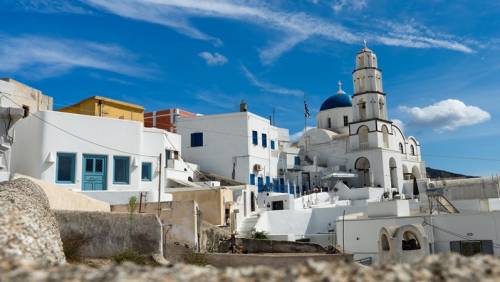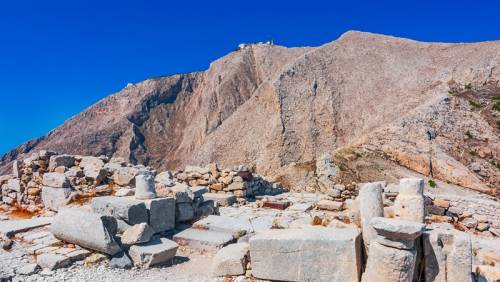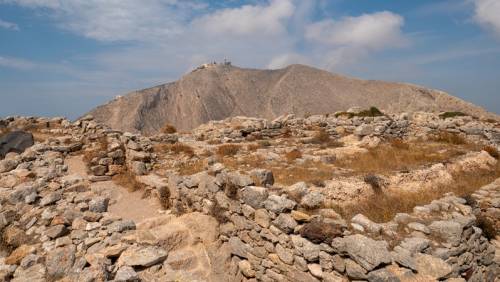
The archaeological site of Akrotiri covers about 20 hectares, although only a portion of the 35 identified buildings has been excavated and opened to the public.
A vast protective roof structure shelters the remains, allowing visits in any season. Inside, raised walkways guide you through the streets of the ancient city, letting you observe the remains of houses, courtyards, and storage areas from above.
As you walk along the pathways, you can easily recognize the paved streets, the multi-story house walls, staircases leading to the upper floors, and even drainage and sewage conduits once covered with stone slabs. The houses did not follow a fixed layout and were often characterized by larger windows on the upper levels. Their interiors were plastered, and large storage jars were used to preserve foodstuffs such as wine, oil, and flour.
The site has also revealed extraordinary frescoes offering a vivid narrative of daily life, rituals, and mythological scenes. Some of these masterpieces, including the “Spring Fresco” and the “Fisherman Fresco”, have been carefully restored and are now displayed at the National Archaeological Museum of Athens.
For reasons of conservation and safety, the most precious artifacts and frescoes are housed today in the museums of Fira and Athens—another excellent reason to include them in your itinerary.
Informational panels and captions throughout the site make it easy to imagine what life in Akrotiri was like 3,600 years ago. A full visit takes about an hour and a half and doesn’t require any special preparation—just allow yourself to be guided by the silence and atmosphere of this place, which tells the story of an entire civilization frozen in time.
Let me leave you with an interesting fact: the “Blue Monkeys Fresco”, displayed at the National Archaeological Museum of Athens, is particularly fascinating because it depicts animals that did not exist in the Aegean region. This suggests a broader cultural horizon and geographical awareness than previously imagined for the Bronze Age. The scene shows eight slim, long-tailed blue monkeys climbing over rocks—most likely species native to the Indian subcontinent. This remarkable detail hints that the Aegean peoples may already have been in contact, through trade and travel, with distant lands thousands of kilometers away.
1 hour of use
Unlock Artificial Intelligence (AI) and enhance your experience
Do you want to explore even more or discover cities not yet covered by the app?
Activate our AI.
It will guide you with the same engaging tone, answering your curiosities in real-time.