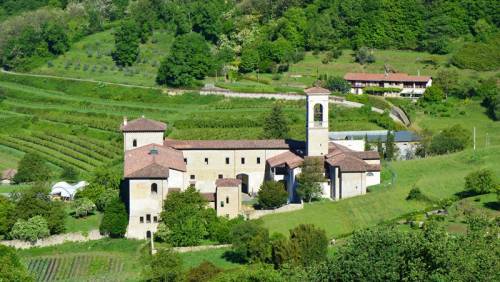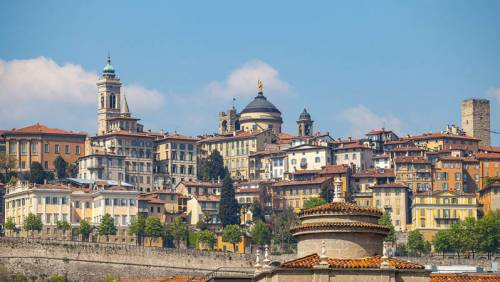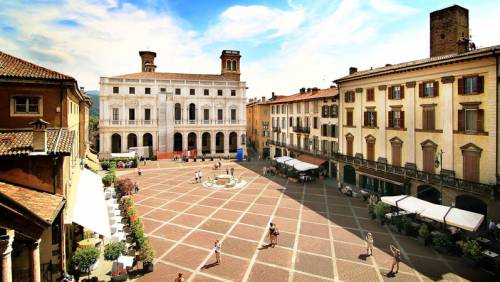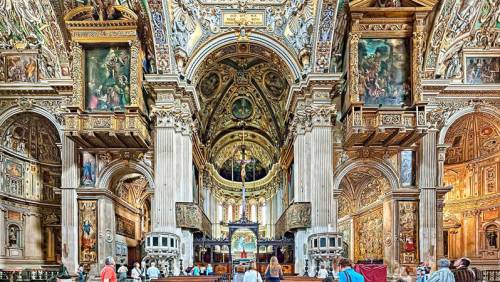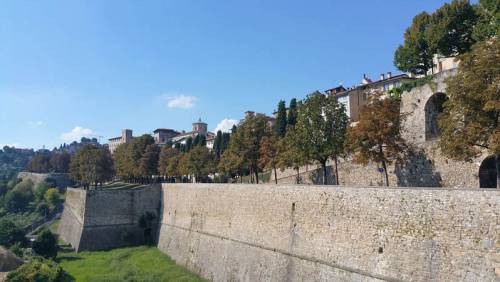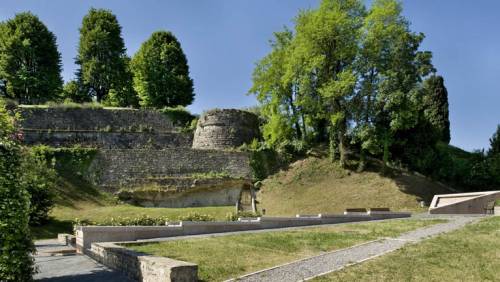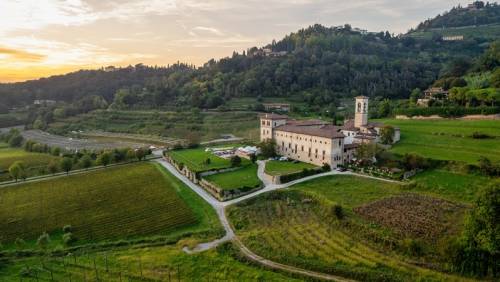
When people speak of Astino, they are first referring to a place: the Astino Valley, a green furrow that opens to the west of Bergamo’s Upper Town.
Between 1107 and 1117, the Vallombrosan monks settled here — a branch of the Benedictine order founded in the 11th century at the Abbey of Vallombrosa in Tuscany. The vocation of this monastic order was centered on prayer and study, but also on agricultural work, the careful use of water, and the care of woods and fields.
The monastery was named after the place where it was built, and the adjoining church, dedicated to the Holy Sepulchre, was consecrated in 1117.
From that moment on, the valley became a productive landscape shaped by the monks, with vegetable gardens, vineyards, and irrigation channels, and still today it maintains a remarkably rural character.
The complex quickly rose in importance, thanks in part to donations from local noble families, and it offered practical services: hospitality to travelers, cultivation of the land, and basic education.
Between the Renaissance and the modern era, Astino was renewed: the cloister, workspaces, and refectory were modified, and art became a fundamental part of the monks’ daily life, as shown by the large painting of the “Last Supper”, which I’ll tell you about in a dedicated file.
A turning point came between the 18th and 19th centuries, with the suppression of monastic orders, which in Lombardy were first introduced by Napoleon Bonaparte and later by Austrian reorganizations. Astino also went through changes of ownership and periods of decline. Nevertheless, its imprint on the landscape is still visible today: the layout of the fields, the terracing, and the pathways rising toward the hills are all legacies of monastic labor.
In the 21st century, thanks to restoration efforts and renewed attention, the complex has been reborn as a cultural and spiritual site: today, you can once again walk through the cloister, the refectory has regained its symbolic centrality, and the entire complex hosts initiatives that enhance both the artistic heritage and the historic agricultural landscape.
An interesting fact: in the refectory, the monks ate in silence while a reader recited passages from sacred texts. This is why, in many monasteries — including Astino — a depiction of the “Last Supper” was placed in this very room, as a visual reminder of the communal meaning of the meal.
1 hour of use
Unlock Artificial Intelligence (AI) and enhance your experience
Do you want to explore even more or discover cities not yet covered by the app?
Activate our AI.
It will guide you with the same engaging tone, answering your curiosities in real-time.