Visible Sections Near Beijing - Ai Voice THE GREAT WALL

Original audio guides written by expert authors
and voiced by professional speakers.
2:29

Visiting the Great Wall from Beijing is an extraordinary experience.
In just a few hours, you can reach some of the most spectacular and best-preserved sections of this immense structure.
Each section has its own character, and choosing which one to visit means deciding which face of this monumental wonder you want to discover.

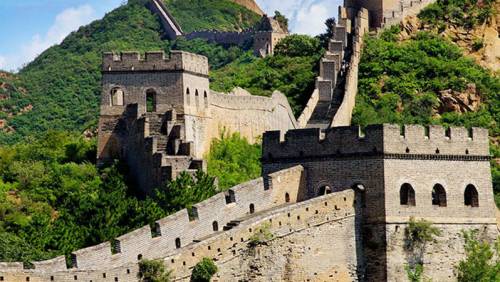
The most famous site is Badaling, about seventy kilometers from Beijing.
It’s the most restored and accessible section, equipped with cable cars and paved paths—perfect for those who want to admire the Wall’s grandeur without much effort.
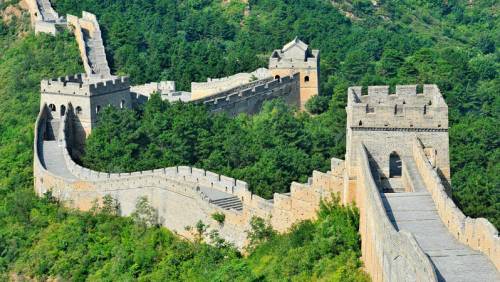
Here, the full scale of the structure is most striking: the ramparts climb over the mountains like a gigantic stone dragon.

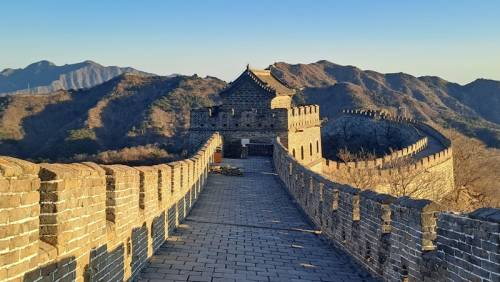
Quieter and surrounded by lush forest is Mutianyu, with its elegant watchtowers and scenic views.
Beloved by families and photographers, it offers breathtaking landscapes year-round, from the deep greens of summer to the red and gold hues of autumn.

Southwest of Beijing lies Juyongguan, a historic mountain pass that once served as the gateway to the capital.
This fortified corridor still preserves ancient temples and inscriptions celebrating the might of the Empire, highlighting the site’s strategic importance.

Further away, yet still reachable on a day trip, are Jinshanling and Simatai—favorites among hikers.
These stretches are more authentic and less restored, winding along steep ridges with stunning panoramas.
A cable car allows visitors to quickly reach higher viewpoints to admire this ancient feat of engineering from above.

Visiting the Great Wall from Beijing is not just a sightseeing excursion—it’s a journey through time and Chinese culture, a way to understand how human ingenuity transformed stone and mountain into a symbol of eternity.


Curiosity: On the eastern side of the Simatai section lies an especially steep segment known as the “Heavenly Ladder,” where the slope reaches up to 80 degrees and the steps are unusually high.
According to an old local legend, the climb was so difficult that “only dragons” could ascend it without stopping.


TravelMate recommends

CHOOSE THE OPTION
THAT SUITS YOU BEST just like more than 500.000 users have already done

Buy Beijing 113 min, 50 stories

Permanently unlock the app with all content of Beijing for
€ 8,99
Buy
Promotion 4776 min, 1579 stories
Unlock audio content of all available cities for 3 years at the promotional price

Included cities Amalfi Coast, Amsterdam, Assisi, Athens, Barcelona, Beijing, Bergamo, Berlin, Cinque Terre, Como, Dubai, Florence, Hong Kong , Lecce, London, Madrid, Miami, Milan, Moscow, Naples, New York, Palermo, Paris, Pisa, Pompeii, Prague, Ravenna, Rome, Saint Petersburg, Santorini, Singapore, Tokyo, Trento, Turin, Venice, Verona , Vienna, Washington
€ 19,99
Buy
TravelMate AI 60  

1 hour of use

Unlock Artificial Intelligence (AI) and enhance your experience
Do you want to explore even more or discover cities not yet covered by the app?
Activate our AI.
It will guide you with the same engaging tone, answering your curiosities in real-time.

€ 4,99
Buy
Don't miss out!
BEIJING INTRODUCTION
1 Audio

BEIJING INTRODUCTION

Today, Beijing is a modern, constantly evolving city, bustling with cars and bicycles, with the vibrant, pulsating pace of life to be expected of the political and economic capital of a superpower...
THE WONDERS OF LOCAL CUISINE
1 Audio

THE WONDERS OF LOCAL CUISINE

Among the most popular starters are vegetarian spring rolls, chūnbǐng juǎncài, filled with mushrooms or vegetables, and there’s also a Beijing version of the famous wonton Chinese...
TIANANMEN SQUARE
2 Audio

TIANANMEN SQUARE

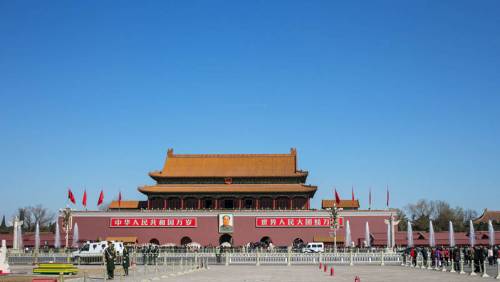
With a surface area of 440,000 square meters, 880 meters long and 500 meters wide, this is the largest square in China, and the sixth largest in the world. It is especially well known as the location...
THE FORBIDDEN CITY
14 Audio

THE FORBIDDEN CITY

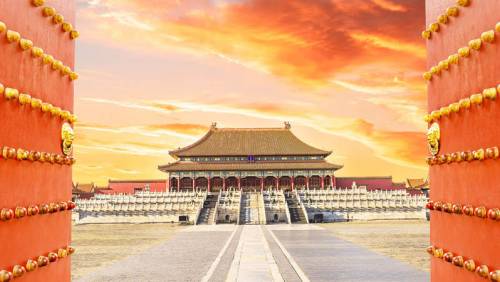
Its Chinese name, Zǐjìnchéng, means forbidden purple city, because the ancient Chinese astronomers believed that the Purple Star, or the Pole Star, marked the center of heaven, and...
JINGSHAN PARK
1 Audio

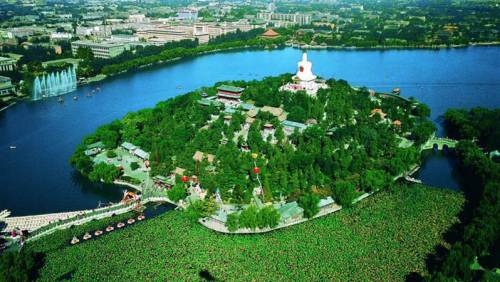
JINGSHAN PARK

Its history stretches back almost a thousand years, to the time when China was governed by the Liao and Jin dynasties, when it was the garden of the imperial palaces, located where the Forbidden City...
NATIONAL MUSEUM
2 Audio

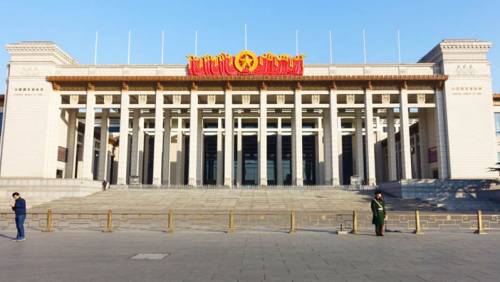
NATIONAL MUSEUM

The Museum of History, originally founded in 1912, was renamed the Museum of the History of Beijing on October 1st, 1949, the date on which the People’s Republic of China was founded, and ten...
BEIHAI PARK
2 Audio

BEIHAI PARK

It was built during the Liao dynasty, between 916 and 1125, and was expanded and altered on numerous occasions. For the most important reconstruction, however, we have to thank Emperor Qianlong, who...
TEMPLE OF HEAVEN
8 Audio

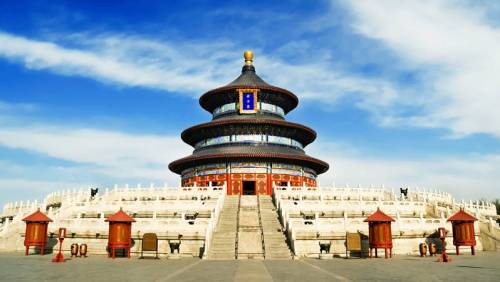
TEMPLE OF HEAVEN

The complex was later expanded and given the name Temple of Heaven during the reign of Emperor Jiajing of the Ming dynasty in the 16th century, and renovated again in the 18th century under Emperor...
THE GREAT WALL
3 Audio

THE GREAT WALL

The Great Wall also allowed for border controls and for the imposition of duties on goods. It was used to keep checks on immigration and emigration and as a transportation corridor for...
SUMMER PALACE
8 Audio

SUMMER PALACE

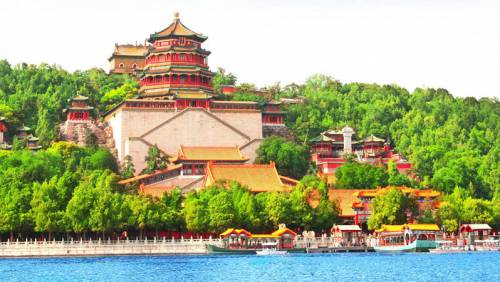
Its origins date to 1153, when the fourth emperor of the Jin dynasty ordered the building of a palace on a small hill known as Jar.Around 1271, after the Yuan dynasty established its capital in...
YONGHE TEMPLE
3 Audio

YONGHE TEMPLE

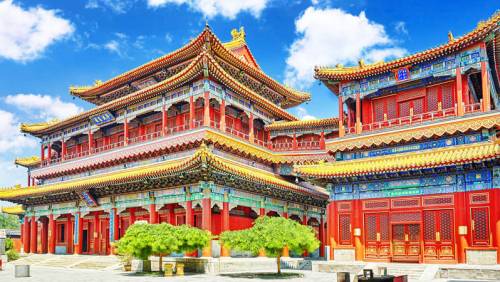
The temple was built in 1694, during the Qing dynasty, where one of the residences housing the eunuchs of the emperor’s court once stood. It was replaced with a residence destined for Prince...
SHICHAHAI HUTONG
1 Audio

SHICHAHAI HUTONG

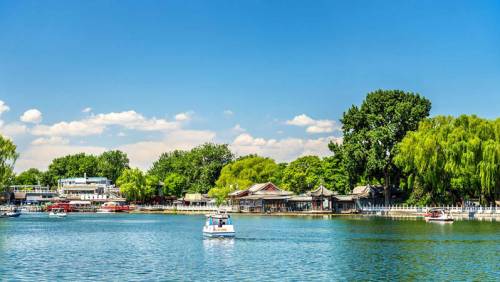
The huge Shichahai area comprises three lakes, surrounded by ten Buddhist and Taoist temples and numerous prestigious buildings.During the Yuan dynasty, from 1271 to 1368, Shichahai marked the end of...
MING TOMBS
4 Audio

MING TOMBS

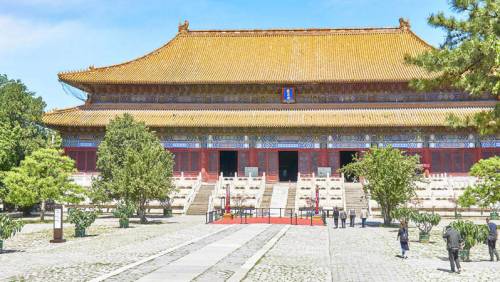
When Zhu Di, or Yongle, the third emperor of the Ming dynasty, moved the capital to Beijing, he looked for a site near the city to build his own tomb. Basing his choice on the principles of Feng Shui,...
TravelMate App

DOWNLOAD NOW
THE TRAVELMATE APP

Purchase your activation code, download the TravelMate App, and turn your smartphone into your personal travel companion!
Listen to audio guides about the wonders of the world with TravelMate.
HAVE FUN!